
Industry Reception
Industry Reception - Dec. 12th 5:00pm to 7:00pm
Location
Summary

Registration
Registration 6:30am to 8:00am
Location
Summary

EEFs are we buy them and selling them the right way?
Dryland Day 1 Session 1: 8:00am to 9am
Location
Speakers
-
Edwin Suarez - Agronomy and Product Development DirectorEdwin Suarez is currently the Agronomy and Product Development Director at Landus. In the past, he has worked with organizations such as Koch Agronomic Services, Midwestern Bioag, USDA-NLAE Lab (former Soil Tilth Lab), Purdue University, and multiple national potato growers and potato associations. Suarez's work in the ag industry has focused on soil health, product development, and enhanced efficiency fertilizer technologies. At Landus, Suarez leads adoption of value-added technologies as well as the creation of new products and propietary portfolio.
Summary

Growers are Engaging Digitally and They are More Profitable Customers for Ag Retailers
Irrigated Day 1 Session 1: 8:00am to 9:00am
Location
Speakers
-
Patrick Sullivan - Senior Vice President of Partner SuccessPat Sullivan is the Senior Vice President of Partner Success at AgVend, the leading provider of digital enablement solutions for agribusinesses. The white-labeled AgVend digital enablement platform pulls together ag retailers’ customer profiles and broader operations into a single, real-time view of their business; enabling a user-friendly system of action that both allows frontline staff and customers to access data in real-time, and streamlines workflows for optimal user experiences. For the past 5 years, Pat has been working with ag retailers and cooperatives helping businesses harness the power of digital tools to transform their operations. As head of the Partner Success team, Pat plays a crucial role in guiding his team as they coach agribusinesses along their digital journey and ensure their success using the AgVend platform. Before joining AgVend, Pat developed distribution channels for Alltech Crop Science and worked for his family's diversified farming operation in Connecticut.
Summary

New Advances in Irrigation Water Management
Irrigated Day 2 Session 1: 8:00am to 9:00am
Location
Speakers
-
Ian Crawford - Strategic Account Manager and Team LeaderTwenty-four years experience in Ag Retail and Manufacturers Representative. Certified Crop Advisor. Previous roles as Crop Adviser in Ag Retail (Plant Foods, Inc.), Technical Agronomist, Adjuvant Portfolio Manager, and Senior Sustainability Manager at J.R. Simplot Company. Current role as Strategic Account Manager and Team Leader for Precision Labs in Western US.
Summary

Achieving the Highest Level of Efficiency with the Equipment You Have
Pest/New Tech Day 1 Session 1: 8:00am to 9:00am
Location
Speakers
-
Ryan Kuster - Precision Ag SpecialistRyan Kuster grew up working on his grandfather's farm in Benge, WA. After earning a degree in Agricultural Technology and Management from Washington State University in 1998, he worked on an irrigated/ dryland farm near Washtucna, WA. In 2009 he accepted a job with Ag Enterprise Supply, Inc. where he is a Precision Ag Specialist and currently manages the parts/ fabrication division of the company. Ag Enterprise is an independently owned and operated company and has been located in Cheney, WA since 1980.
Summary

Soil Health and Testing
Dryland Day 1 Session 2: 9:10am to 10:10am
Location
Speakers
-
Courtney Cosdon - Soil Health InstructorCourtney has been a soil health instructor for University of Idaho Extension and USDA NRCS since late 2021. She received her M.S. in Soil and Land Resources in 2020 from the University of Idaho. In her current program, she develops and delivers soils and soil health educational programs and materials for Idaho farmers, master gardeners and children with the goal of improving soil health in Southern Idaho. She is based in Boise.
Summary

Whats Wrong with My Crop? Diagnosing Abiotic and Biotic Causes of Plant Problems
Irrigated Day 1 Session 2: 9:10am to 10:10am
Location
Speakers
-
Carrie Wohleb - Professor and Extension SpecialistDr. Carrie H. Wohleb is a Professor and Extension Specialist with Washington State University. Her programs aim to improve the productivity and sustainability of vegetable and seed crop production in the irrigated areas of the Columbia Basin. She works out of the WSU Grant County Extension office in Moses Lake. Carrie’s current areas of interest are: (1) investigating and resolving emerging problems in vegetable and seed crops, (2) pest monitoring and other aspects of integrated pest management, and (3) developing decision support tools and educational materials for vegetable and seed producers. Carrie earned a B.S. degree in botany (plant physiology) from the University of Washington, and M.S. and Ph.D. degrees in horticulture (potato physiology and potato agronomy) from Washington State University. She worked as an agronomist on a potato farm for 8 years before returning to Washington State University in 2008.
Summary

Drift Management While Improving Spray Efficacy
Pest/New Tech Day 1 Session 2: 9:10am to 10:10am
Location
Speakers
-
Ian Crawford - Strategic Account Manager and Team Leader24 years experience in Ag Retail and Manufacturers Representative. Certified Crop Advisor. Previous roles as Crop Advisor in Ag Retail (Plant Foods, Inc.), Technical Agronomist, Adjuvant Portfolio Manager, and Senior Sustainability Manager at J.R. Simplot Company. Current role as Strategic Account Manager and Team Leader for Precision Labs in Western US.
Summary

Bio-what? Bio-who? Bio-how?
Dryland Day 1 Session 3: 10:30am to 11:30am
Location
Speakers
-
Edwin Suarez - Agronomy and Product Development DirectorEdwin Suarez is currently the Agronomy and Product Development Director at Landus. In the past he has worked with organizations such as Koch Agronomic Services, Midwestern Bioag, USDA-NLAE Lab (former Soil Tilth Lab), Purdue University and multiple national potato growers and potato associations. Suarez work in the ag industry has focused on soil health, product development and enhanced efficiency fertilizer technologies. At Landus Suarez leads adoptions of value added technologies as well as creation of new products and propietary portfolio.
Summary

The Effect of Soil Type and Fertilizer Application Rates on Biomass and Nitrate Leaching in Annual Ryegrass
Irrigated Day 1 Session 3: 10:30am to 11:30am
Location
Speakers
-
Abigail Tomasek - Assistant Professor/Statewide Soil and Water Quality Extension SpecialistDr. Carrie H. Wohleb is a Professor and Extension Specialist with Washington State University. Her programs aim to improve the productivity and sustainability of vegetable and seed crop production in the irrigated areas of the Columbia Basin. She works out of the WSU Grant County Extension office in Moses Lake. Carrie’s current areas of interest are: (1) investigating and resolving emerging problems in vegetable and seed crops, (2) pest monitoring and other aspects of integrated pest management, and (3) developing decision support tools and educational materials for vegetable and seed producers. Carrie earned a B.S. degree in botany (plant physiology) from the University of Washington and M.S. and Ph.D. degrees in horticulture (potato physiology and potato agronomy) from Washington State University. She worked as an agronomist on a potato farm for 8 years before returning to Washington State University in 2008.
Summary

Seedbank Dynamics of Weed Control in Small Grains Systems
Pest/New Tech Day 1 Session 3: 10:30am to 11:30am
Location
Speakers
-
Doug Finkelnburg - Area Extension Educator - Cropping SystemsFinkelnburg supports dryland cropping systems activities throughout northern Idaho. His collaborative approaches to deliver unbiased university-driven research to agricultural producers and agricultural industry partners to solve ongoing production challenges. B.S. University of Idaho, 2002. M.S. University of Idaho, 2006.
Summary

Keynote Luncheon
Keynote Luncheon 11:30am to 1:00 pm
Location
Speakers
-
Gordon Smith - Chairman of the Board, Smith Frozen Foods, Inc.Born in Pendleton, Ore., Gordon H. Smith spent much of his childhood in Washington, D.C. where his father served in the Eisenhower administration. He attended college at Brigham Young University, received his law degree from Southwestern University School of Law in Los Angeles, and practiced law in New Mexico and Arizona before returning to Oregon to take the helm at the family-owned Smith Frozen Foods business in Weston, Ore. in 1980. Smith Frozen Foods thrived under Gordon’s leadership and quickly became one of the nation’s largest producers of frozen peas, corn, carrots, lima beans, garbanzo beans, and onions. Politics and serving the public had always been a passion of Gordon’s, and in 1992 he was elected to the Oregon State Senate, rising to the position of president of that body after only three years. Gordon was elected to the U.S. Senate in 1996. He served on the following committees: Commerce, Science and Transportation, Energy and Natural Resources, Finance, Foreign Relations, and Indian Affairs. He was the Ranking Member of the Senate Finance Subcommittee on International Trade and Global Competitiveness. He chaired the Special Committee on Aging. While in office he worked on many critical legislative initiatives but considers his most important the passage of the Garrett Lee Smith Memorial Bill signed into law by President George H. Bush in 2004. After leaving the U.S. Senate, Gordon served as senior advisor in the Washington offices of Covington & Burling, LLP. In 2009, the National Association of Broadcasters (NAB) asked Gordon to join the organization as president and CEO where he remained until he stepped down from that role in December 2021. During his tenure, NAB won every major legislative battle affecting the broadcast industry. Gordon currently serves as Special Advisor to the organization. Gordon and his wife Sharon live in Pendleton, OR., and are the parents of three children and five grandchildren.
Summary
Humic, Fulvic, and Humin in Soil Health and Nutrient Use Efficiencies: The Art, Sciences, and Technology Behind the Process
Dryland Day 1 Session 4: 1:10pm to 2:10pm
Location
Speakers
-
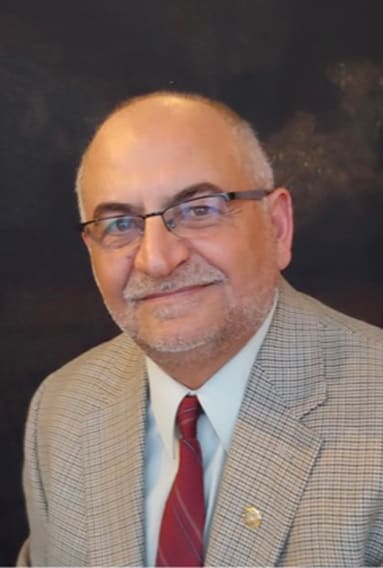
Mir Seyedbagheri - Director of Research and DevelopmentMir is the Director of Research and Development for BioGro Inc, as well as a professor emeritus at the University of Idaho. His areas of specialty are soil science and agronomy, as well as biometeorology. He achieved academic recognition on the Dean’s and National Dean’s Lists while in graduate school, as well as a member of Phi Kappa Phi Honor Society. At BioGro, Mir works closely with technical field advisors, in field research, and with a production chemist in Buckeye, Arizona to manufacture the most dynamic, innovative, thermophilic and soluble humic powder and granular. Mir has brought a great breadth and depth of experience to the position, reflected by his myriad of achievements, namely solubilizing the humin portions of humic substances. This tour de force is reflected in an array of dynamic humic products on the markets. These products, reflecting Mir’s research, applied abilities, and unique intellectual properties, have offered clear and quantifiable results to growers. Mir has been a pioneer in humic substances research in Idaho and the Pacific Northwest. His research has been disseminated throughout the state, nationally, and internationally. He was also invited to present on sustainable and regenerative ag, along with organic farming at numerous conferences, locally, statewide, nationally, and globally Mir gained particular national and international recognition for his creative and innovative applied research on the effects of humic substances (functional carbon) on soil and plant metabolisms. Among the multitude of recognition was the inclusion of his abstract, “Applied Technology on the Influence of Humic Substances on Fertilizer, Water-use Efficiency, and Soil Health” in the venerable SAO/NASA Astrophysics Data System. In addition, Mir has given over 380 talks (many as a keynote speaker) and published a multitude of abstracts, book chapters, and articles worldwide on soil health matters. Mir was the co-chair of the International Humic Substances Society, Committee on Applied Research in Soil, Nutrient Management, and Crop Production. He has overseen many groundbreaking and innovative research projects in the areas of soil sustainability and regenerative ag, functional carbon extraction, soil microbiometers, salt remediation, crop production, and desertification. Mir also implemented Smart Designs, such as soil, water sensors, satellite imagery, and remote crop-monitoring practices. In addition, he has cooperated on a myriad of Harvest Quality Vision projects. Mir was previously in the employ of HGS, where he was active in directing their chemist, along with many of their crop production and agronomic endeavors— in the US and over 40 other nations. In addition, for over fifteen years, Mir conducted field research and trained Actagro’s technical field advisors on the applied science of humic substances. He also gave numerous technical presentations to former CPS farm advisors on Actagro products and outreach. Mir is the recipient of 34 scholarly and prestigious state, regional, national, and international awards, including the 2016 Hall of Fame Award in Agriculture, two Excellence in Research awards from the governor of Idaho, and the Excellence in Outreach and Diversity awards from the University of Idaho. He maintains long-standing memberships in 6 prestigious national and international scholarly and scientific societies.
Summary

New Rules and Regulations in Washington State
Pest/New Tech Day 1 Session 4: 1:10pm to 2:10pm
Location
Speakers
-
Aaron Brown - Area SupervisorAaron is a Area Supervisor for the WSDA- Pesticide Compliance Section, supervising staff in the South Central area of Washington from Walla Walla to Yakima WA. Aaron was an investigator with the Pesticide Compliance section for 12 years before moving into a supervisor role.
Summary

An Overview of Potato Fertility and Cultural Management
Irrigated Day 1 Session 4: 1:10pm to 2:10pm
Location
Speakers
-
Mark Pavek - Professor & Research AgronomistDr. Mark Pavek is a Professor and Research Agronomist in the Department of Horticulture at Washington State University in Pullman, WA. Dr. Pavek has been with WSU for 20 years. He conducts agronomic and variety development research on potatoes in WA State. He uses his research results to provide outreach to the local industry, aiding in their potato production and marketing. In addition to academia, Dr. Pavek was born and raised in American Falls, ID and has extensive farming experience and has worked for large ag corporations.
Summary

Critical Issues Roundtable
Executive Track Session 1:10pm to 2:30pm
Location
Speakers
-
Richard Gupton - Senior Vice President, Public Policy & CounselRichard leads the organization’s Public Policy team. Develops the strategic positioning for the organization’s policy priorities and help build increased visibility of the industry with Congress and federal agencies. Oversees ARA’s Political Action Committee (ARAPAC).
-
Craig Smith - Executive Director, FWAACraig will serve as the moderator for this session.
-
Dan Kirschner - Executive DirectorAs Executive Director of the NWGA, Kirschner works to foster understanding and informed decision-making on natural gas issues in the region. Prior to the NWGA, Kirschner worked in the Washington State Legislature, for the U.S. Senate and for a regional chamber of commerce in the Northwest. He adds an MBA to his policy and public affairs experience.
-
Rick Dunn, P.E. - General Manager, Benton PUDRick Dunn is the General Manager of Benton PUD; a position he has held since March 1, 2020. Rick is a graduate of Washington State University with a Bachelor of Science in Electrical Engineering and is a registered Professional Engineer. He has more than 36 years of electrical power and utility systems engineering, operations, and management experience in both the public and private sectors. Rick is a leader well-versed on the challenges of balancing complex energy and environmental issues. In the run up to the passage of Washington State’s Clean Energy Transformation Act (CETA), Rick was directly involved in the development of comprehensive studies of least-cost approaches to Pacific Northwest electricity sector decarbonization and the impacts on power grid reliability. Rick understands how the grid works and continues to be actively involved in managing Benton PUD’s power supply portfolio and participation in northwest power markets as both a purchaser and seller of electricity. As a leader in the Tri-Cities community and long-time resident, Rick is a big supporter of nuclear power and is knowledgeable of the history of hydropower in the Pacific Northwest as well as the economic and environmental benefits and impacts of the dams. Rick serves on the Boards of Directors of Northwest RiverPartners and the Pacific Northwest Utilities Conference Committee (PNUCC) and serves on the Executive Committee of the Public Power Council (PPC). Rick was selected in 2021 as one of two utility stakeholder representatives from the four northwest states to serve on the Columbia Basin Collaborative’s Integration/Recommendation Group (I/RG). The I/RG will seek consensus agreement on proposed actions and develop recommendations to federal, state, tribal and other decision-makers on issues affecting salmon and steelhead recovery in the Columbia River Basin. Rick has been a clean energy and power grid reliability guest speaker on many occasions including for civic, economic development and industry trade groups as well as political interest groups on both sides of the aisle.
Summary
A Comparative Evaluation of BioGro's Sustainable Alternative Fumigation Environment Program (SAFE) and a Standard Fumigated Growers Program in Strawberries and Potatoes
Dryland Day 1 Session 5: 2:20pm to 3:20pm
Location
Speakers
-
Mir Seyedbagheri - Director of Research and DevelopmentMir is the Director of Research and Development for BioGro Inc, as well as a professor emeritus at the University of Idaho. His areas of specialty are soil science and agronomy, as well as biometeorology. He achieved academic recognition on the Dean’s and National Dean’s Lists while in graduate school, as well as a member of Phi Kappa Phi Honor Society. At BioGro, Mir works closely with technical field advisors, in field research, and with a production chemist in Buckeye, Arizona to manufacture the most dynamic, innovative, thermophilic and soluble humic powder and granular. Mir has brought a great breadth and depth of experience to the position, reflected by his myriad of achievements, namely solubilizing the humin portions of humic substances. This tour de force is reflected in an array of dynamic humic products on the markets. These products, reflecting Mir’s research, applied abilities, and unique intellectual properties, have offered clear and quantifiable results to growers. Mir has been a pioneer in humic substances research in Idaho and the Pacific Northwest. His research has been disseminated throughout the state, nationally, and internationally. He was also invited to present on sustainable and regenerative ag, along with organic farming at numerous conferences, locally, statewide, nationally, and globally Mir gained particular national and international recognition for his creative and innovative applied research on the effects of humic substances (functional carbon) on soil and plant metabolisms. Among the multitude of recognition was the inclusion of his abstract, “Applied Technology on the Influence of Humic Substances on Fertilizer, Water-use Efficiency, and Soil Health” in the venerable SAO/NASA Astrophysics Data System. In addition, Mir has given over 380 talks (many as a keynote speaker) and published a multitude of abstracts, book chapters, and articles worldwide on soil health matters. Mir was the co-chair of the International Humic Substances Society, Committee on Applied Research in Soil, Nutrient Management, and Crop Production. He has overseen many groundbreaking and innovative research projects in the areas of soil sustainability and regenerative ag, functional carbon extraction, soil microbiometers, salt remediation, crop production, and desertification. Mir also implemented Smart Designs, such as soil, water sensors, satellite imagery, and remote crop-monitoring practices. In addition, he has cooperated on a myriad of Harvest Quality Vision projects. Mir was previously in the employ of HGS, where he was active in directing their chemist, along with many of their crop production and agronomic endeavors— in the US and over 40 other nations. In addition, for over fifteen years, Mir conducted field research and trained Actagro’s technical field advisors on the applied science of humic substances. He also gave numerous technical presentations to former CPS farm advisors on Actagro products and outreach. Mir is the recipient of 34 scholarly and prestigious state, regional, national, and international awards, including the 2016 Hall of Fame Award in Agriculture, two Excellence in Research awards from the governor of Idaho, and the Excellence in Outreach and Diversity awards from the University of Idaho. He maintains long-standing memberships in 6 prestigious national and international scholarly and scientific societies.
Summary

From 'Waste' to 'Worth': Fertilizing with Manure and Compost
Irrigated Day 1 Session 5: 2:20pm to 3:20pm
Location
Speakers
-
Linda Schott - Soil & Nutrient Management Extension SpecialistLinda joined the University of Idaho (UI) as the Soil and Nutrient Management Extension Specialist based in Twin Falls in January 2019. Originally from Iowa, she received her MS at Iowa State University and Ph.D. at the University of Nebraska-Lincoln in Agricultural Engineering. Dr. Schott's research and extension program focuses on how management practices, such as tillage, cover crops, and manure application, impact soil health and water quality.
Summary

The Good, The Bad, and The Buzzy: The Impacts of Pesticides on Pollinators and How to Protect Them
Pest/New Tech Day 1 Session 5: 2:20pm to 3:20pm
Location
Speakers
-
Riley Reed - Ph.D. Student WSURiley Reed grew up on his family's farm in eastern Washington and developed a fascination with insects at an early age. After completing his bachelor's degree in agricultural biotechnology at Washington State University, he joined the WSU honey bee program as a Ph.D. student in 2021. Currently, Riley is studying beekeeping best management practices and strategies to improve pollination in vegetable seed.
Summary

Enhancing Plant Nutrition and Soil Conditions with Sulphur
Dryland Day 1 Session 6: 3:30pm to 4:30pm
Location
Speakers
-
Wesley Haun - Senior AgronomistWesley Haun is a senior agronomist with Tiger-Sul Products, LLC. He coordinates soil fertility and crop nutrition research with various research organizations in the United States of America and internationally. He conducts agronomic educational programs that emphasize the benefits of a complete plant nutrient management program. Wesley received his Bachelor of Science Degree with a major in Agricultural Mechanization and a Master's Degree with a major in Plant & Soil Science from the University of Tennessee. His professional certifications include Certified Professional Agronomist, Certified Professional Soil Scientist, and Certified Crop Adviser. He has a diverse agronomy background that spans retail sales/consulting at the farm gate to agronomist at regional, national, and international levels.
Summary

Soil Carbon 101
Irrigated Day 1 Session 6: 3:30pm to 4:30pm
Location
Speakers
-
Linda Schott - Soil and Nutrient Management Extension SpecialistLinda joined the University of Idaho (UI) as the Soil and Nutrient Management Extension Specialist based in Twin Falls in January 2019. Originally from Iowa, she received her MS at Iowa State University and Ph.D. at the University of Nebraska-Lincoln in Agricultural Engineering. Dr. Schott's research and extension program focuses on how management practices, such as tillage, cover crops, and manure application, impact soil health and water quality.
Summary

Precision Ag: Where Have We Come From and Where Are We Going?
Pest/New Tech Day 1 Session 6: 3:30pm to 4:30pm
Location
Speakers
-
Ryan Kuster - Precision Ag SpecialistRyan Kuster grew up working on his grandfather's farm in Benge, WA. After earning a degree in Agricultural Technology and Management from Washington State University in 1998, he worked on an irrigated/ dryland farm near Washtucna, WA. In 2009 he accepted a job with Ag Enterprise Supply, Inc. where he is a Precision Ag Specialist and currently manages the parts/ fabrication division of the company. Ag Enterprise is an independently owned and operated company and has been located in Cheney, WA since 1980.
Summary

Advocacy Dinner, Auction and Casino Night 5:00pm to 10pm
Advocacy Dinner, Auction & Casino 5:00pm to 10pm
Location
Summary

Do label approved uses of herbicides adversely affect soil health?
Dryland Day 2 Session 1: 8:00am to 9am
Location
Speakers
-
Allan Felsot - Affiliate ProfessorProfessor Felsot holds tenure in the Department of Entomology at Washington State University (WSU) and is also Affiliate Professor in the WSU School of the Environment (SoE). Since 1993, he has been stationed in the WSU Food and Environmental Quality Lab in Richland, WA. From 1978-1993, he was a project leader for pesticide chemistry and toxicology research in the Illinois Natural History Survey at the University of Illinois. Current research activities have been focused on probabilistic risk assessments of environmental contaminants, especially pesticides. Professor Felsot also serves as specialist in environmental chemistry and toxicology for WSU Extension. Professor Felsot has received the American Chemical Society AGRO Fellow Award (2008) and the ACS Fellow Award (2022), the Entomological Society of America Founders Memorial Award (2008), the WSU College of Agricultural, Human, and Natural Resources Sciences (CAHNRS) Award for Excellence in Extension (2001), the WSU CAHNRS Award for Excellence in Teaching (2019), the Western Crop Protection Association North Star Award (2000), Honorary Member Award of the WA State Weed Association (2000), the WSU College of Agriculture Team Interdisciplinary Award as a member of the Urban IPM & Pesticide Safety Education Team (2009), and the Entomological Society of America Excellence in Teaching Award (2019). During 1992 Dr. Felsot was a Fulbright Scholar assigned to lecturing and research in Cyprus.
Summary

Residual Herbicide Application for Downy Brome Control
Pest/New Tech Day 2 Session 1: 8:00am to 9:00am
Location
Speakers
-
Aaron EsserI'm Aaron Esser and I grew up on a farm near Genesee, Idaho. I received my BS degree from the University of Idaho in Agriculture Economics and my MS degree from the University of Idaho in Plant Science. I've been with WSU Extension for 23 years and my work has focused on dryland cropping systems mostly on wheat production. My Extension program is mostly focused in Adams and Lincoln County and I also manage the WSU Wilke Research and Extension Center located near Davenport, WA.
Summary

New Tools for Root-Knot Nematode Diagnostics
Pest/New Tech Day 2 Session 2: 9:10am to 10:10am
Location
Speakers
-
Cynthia Gleason - Associate ProfessorCynthia Gleason an associate professor at Washington State University in the Department of Plant Pathology working in nematology. She obtained her PhD from UC Davis and she moved to Pullman in 2016 to start a reseach program molecular nematology. Her research focuses on root-knot nematodes, which is a significant threat to potato farmers in the region.
-
Cassandra Bates - Manager of the Plant Pest Diagnostic ClinicCassandra Bates joined the WSU Plant Pathology Department as the diagnostician and manager of the Plant Pest Diagnostic Clinic in 2022. Cassandra received her Master of Science in Entomology/Nematology at Michigan State University in 2006. Upon graduating she went on to be the education coordinator for the North Central Plant Diagnostic Network, then onto managing various research programs from Potato Cyst Nematode in Idaho to tickborne pathogens in cattle.
Summary

Blending the Old with the New in Crop Nutrition
Dryland Day 2 Session 2: 9:10am to 10:10am
Location
Speakers
-
Christi Falen - Agronomy Technical Services Manager
Summary

Post Harvest Nutrient Management in Cereal Grain Systems
Dryland Day 2 Session 3: 10:20am to 11:20am
Location
Speakers
-
Aaron EsserI'm Aaron Esser and I grew up on a farm near Genesee, Idaho. I received my BS degree from the University of Idaho in Agriculture Economics and my MS degree from the University of Idaho in Plant Science. I've been with WSU Extension for 23 years and my work has focused on dryland cropping systems mostly on wheat production. My Extension program is mostly focused in Adams and Lincoln County and I also manage the WSU Wilke Research and Extension Center located near Davenport, WA.
Summary

Identification and Management of Winter Wheat Diseases
Pest/New Tech Day 2 Session 3: 10:20am to 11:20am
Location
Speakers
-
Tim Murray - ProfessorDr. Tim Murray is Professor of Plant Pathology at Washington State University. He received a B.S. in Plant Science from the University of California Davis, and M.S. and Ph.D. degrees in Plant Pathology from Washington State University. He joined WSU as a faculty member in 1983, where he conducts research on diseases of small grains and grasses and taught introductory plant pathology until 2013 when he joined the Dryland Cropping Systems Team as extension plant pathologist. Dr. Murray’s research focuses on sustainable management of soilborne wheat diseases, with emphasis on disease resistance, pathogen genetic variation, and soil health. He is author of A Colour Handbook of Diseases of Small Grain Cereal Crops (1998, 2009), co-editor of The Encyclopedia of Plant Pathology (2001) and Compendium of Wheat Diseases and Pests, 3rd edition (2010), and author of over 130 scientific publications.
Summary

Herbicide Efficacy & Persistence: Soil pH Matters
Dryland Day 2 Session 4: 11:30am to 12:30pm
Location
Speakers
-
Drew Lyon - Professor and Endowed Chair Small Grains Extension and ResearchDrew Lyon is Professor and Endowed Chair Small Grains Extension and Research, Weed Science at Washington State University in Pullman. His Extension and Research Program focuses on integrated weed management in dryland small grain production systems. Prior to his arrival at WSU in 2012, Drew served 22 years as the Extension Dryland Cropping Systems Specialist at the University of Nebraska-Lincoln Panhandle Research and Extension Center in Scottsbluff. He is a Fellow of the American Society of Agronomy, Crop Science Society of America, and the Western Society of Weed Science. He received his B.S. in Agriculture from the University of Illinois at Urbana-Champaign and his M.S. and Ph.D. in Agronomy/Weed Science from the University of Nebraska-Lincoln.
Summary

ISDA Applicator Information Update
Pest/New Tech Day 2 Session 4: 11:30am to 12:30pm
Location
Speakers
-
Sherman Takatori - Pesticide Services Program ManagerSherman grew up in southwest Idaho on his family's farm and attended the University of Idaho graduating with a BS in Plant Science/Crop Management. After leaving the University, he served in the United States Army as a Signal Officer where he managed and operated numerous automated and computerized communications systems. Upon leaving the military, he worked within the computer and technology industry and then joined the Idaho State Department of Agriculture (ISDA) in 1997. Sherman produces outreach training materials and speaks to agricultural associations, consumer groups, home gardener associations, and high school students about the importance of pesticides as management tools in modern agriculture, general pest control, and human health. He also provides informational presentations on Idaho Pesticide Laws and Rules, pesticide safety issues, and current ISDA regulatory issues. He is a member of the American Association of Pesticide Safety Educators (AAPSE) and served as the Western States Representative to the association’s executive board from 2003 through 2005. From 2006 through 2012, Sherman served as on the Board of Directors for the Certification and Training Assessment Group which is a national board that advises the US Environmental Protection Agency on issues related to pesticide applicator training, pesticide safety, and pesticide product policy. He currently is the Program Manager for ISDA’s Pesticide Services that includes applicator training, pesticide product registration, and groundwater pesticide monitoring.